- CRE Daily
- Posts
- Developers Say LA’s Mansion Tax Is Worsening the Housing Shortage
Developers Say LA’s Mansion Tax Is Worsening the Housing Shortage
A policy designed to target mansions is increasingly hitting multifamily and commercial development.

Nina Dale
May 22, 2026
In partnership with

Good morning. LA’s “mansion tax” was designed to fund affordable housing, but developers say it’s now slowing apartment construction across the city. As officials debate revisions, the fight over Measure ULA is becoming a larger referendum on housing policy and development economics.
CRE Trivia 🧠
The Howard Hughes Corporation was spun off in 2010 from which bankrupt mall REIT, with Bill Ackman’s Pershing Square Capital playing a major role in the restructuring?
(Answer at the bottom of the newsletter)
IN PARTNERSHIP WITH MOGUL
The Bosworth: 8.3% cap luxury STR, $165,847 of equity left
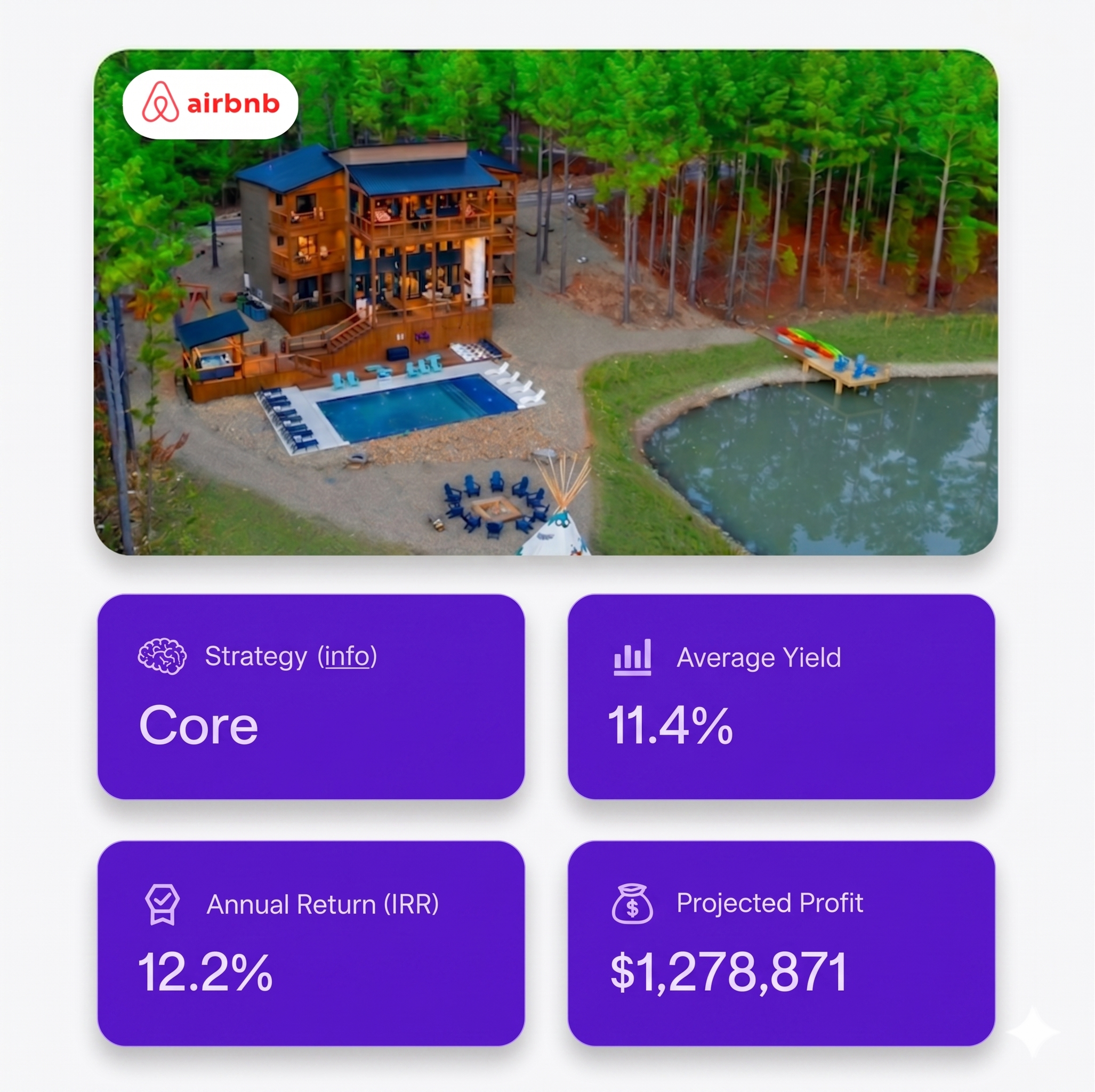
mogul's founders built Goldman Sachs' $1B SFR platform. Now they're offering you access to a stabilized luxury STR in Broken Bow, OK. Acquired at $2,225,000 against a $2,300,000 third-party appraisal.
The 2024-built property sits in a booming drive-to vacation market. More than 2M annual visitors come from DFW, OKC, and Tulsa. 4,500 SF on 1.5 acres. Six king ensuites, heated pool, stocked pond, and private dock.
Investors enter at an 8.3% cap rate. T12 revenue of $385,000 came in 23% above the conservative $312,000 underwriting. 78% of Year 1 is already pre-leased through 2026 bookings. Distributions begin in June. And, they have more deals available.
*This is a paid advertisement. Please see the full disclosure at the bottom of the newsletter.
Market Snapshot
|
| ||||
|
|
Mansion Math
Developers Say LA’s Mansion Tax Is Worsening the Housing Shortage
A tax aimed at luxury home sales is increasingly being blamed for slowing multifamily construction in one of America’s most supply-constrained housing markets.
Mansion tax fallout: Los Angeles’ Measure ULA — the so-called “mansion tax” — charges 4% on property sales above $5.3 million and 5.5% on deals over $10.6 million. Though aimed at luxury homeowners, the tax also applies to apartment, commercial and development properties. Since it passed in 2022, sales of multifamily-zoned parcels above the threshold have fallen nearly two-thirds, according to Rand Housing Center economist Jason Ward.
Development slowdown: Developers say the transfer tax has made many projects financially unworkable in an already costly market. One Venice-area project with nearly 100 planned apartments was scrapped after the tax altered returns, while multifamily permitting in Los Angeles fell 46% from 2022 to 2025 — the lowest level since 2013.

Revenue vs. reality: Supporters pitched the measure as a way to fund affordable housing and renter protections during L.A.’s homelessness crisis. The tax has generated about $1.19 billion over three years, but only $119 million had been distributed as of April 2026, mostly for rental assistance and eviction defense. Affordable units funded through the program are projected to cost nearly $780,000 each.
Political pressure builds: City officials and business groups are debating revisions to the tax, including exemptions for new multifamily and commercial projects. At the same time, a statewide ballot initiative backed by real estate interests and tech billionaires aims to repeal local transfer taxes entirely.
The broader debate: Proponents say rising interest rates — not the tax — are slowing construction nationwide. Critics argue Los Angeles added a major new cost just as the city needs more housing, while economists warn fewer property sales could offset much of the tax revenue generated.
➥ THE TAKEAWAY
Balancing housing goals: As Los Angeles weighs possible revisions to Measure ULA, the city faces a difficult policy question: how to preserve funding for affordable housing while avoiding further damage to housing production. The answer could shape future housing policy debates well beyond California.
INVESTOR SENTIMENT
Where Is CRE Sentiment Heading Next?

Take our Q2 2026 Fear & Greed Survey in under 5 minutes and get our 20 AI Prompts for CRE Professionals guide plus full industry sentiment results.
Reply “DONE” after completing the survey to receive your guide.
*This is a paid advertisement. Please see the full disclosure at the bottom of the newsletter.
✍️ Editor’s Picks
An active sponsor in an attractive cycle: Ziff Real Estate Partners has deployed over $180M+ across 1.125M SF of necessity-based retail in the past 18 months — with full in-house management from acquisition through disposition. (sponsored)
Exit clause: The House passed a housing bill removing a seven-year sale requirement for rental homes, easing pressure on developers as the measure advances with White House backing.
Sales slump: CRE sales fell 33% in April as rising Treasury yields and higher borrowing costs slowed deal activity across most sectors, reversing early-year momentum.
AI advantage: AI is becoming the connective tissue of CRE brokerages, helping firms automate up to 37% of their tasks by unifying prospecting, CRM, marketing, and deal management into a single AI-powered workflow. (sponsored)
Cap drift: Higher rates and Treasury yields are pushing CRE cap rates higher, with analysts warning they may still have room to rise from current levels.
🏘️ MULTIFAMILY
Impact shift: Impact investing in multifamily is losing favor with investors, but data shows affordable housing strategies are improving tenant stability and boosting NOI.
Merger of equals: AvalonBay and Equity Residential agreed to a record $69B all-stock merger to create the largest U.S. apartment REIT, combining 180,000 units and targeting major cost synergies.
BTR surge: The South dominates U.S. build-to-rent development with 37,000+ units underway as the sector expands amid affordability pressures and renter demand.
Capital flip: A pullback in core capital has flipped multifamily pricing, causing newer Class A assets to trade at higher cap rates than older value-add properties.
🏭 Industrial
CLO surge: Värde Partners closed a $1B CRE CLO backed by 40 properties, signaling strong demand in the CRE securitization market.
Atlanta buildout: Atlanta’s industrial pipeline has expanded sharply, but deliveries lag, with rising construction, steady sales activity, and vacancy staying slightly below the U.S. average.
Storage refi: Goldman Sachs provided a $40M refinancing for William Warren Group’s five-property self-storage portfolio, backed by non-recourse five-year debt across multiple states.
🏬 RETAIL
Lease unwind: A&G Real Estate Partners is marketing 78 Walgreens leases as part of a broader retail downsizing wave, turning bankrupt and shuttered stores into saleable real estate assets.
Florida expansion: Donatos Pizza is planning up to 25 new Florida locations as it targets high-growth Sun Belt markets driven by population inflows and rising brand familiarity from Midwest transplants.
Auto split: Auto-service net lease assets are priced very differently by tenant, with investors separating credit, lease structure, and format rather than treating the sector as a single asset class.
Curated commerce: Retailers are getting more selective with expansion and store size as demand shifts to higher-quality apparel and rising rents force more efficient, right-sized locations.
🏢 OFFICE
Office pivot: Prime Group bought a vacant Chicago office tower at a steep discount, with potential plans to reposition it into mixed-use including residential or hotel.
Debt play: Presidio Bay is targeting discounted debt on San Francisco’s former Fed building, aiming to take control via foreclosure and reposition it for hospitality use.
Discount sale: A suburban Boston office building in Burlington sold for about one-third of its prior value, reflecting continued steep price declines across the region’s office market.
🏨 HOSPITALITY
Luxury surge: Southeast hotel investment activity jumped sharply in Q1, driven by a surge in deal volume and pricing strength, led by a major luxury resort transaction that skewed overall regional performance.
AI friction: Hotels often deploy AI tools first instead of targeting real workflow bottlenecks, when the better approach is to fix one high-friction task, measure results, and scale only if it saves time or money.
Brand build: A 120-key Margaritaville boutique hotel is planned in Sarasota, with construction starting soon and opening targeted for next fall.
📈 CHART OF THE DAY

Chart courtesy of Colliers
Multifamily concessions hit a record $129/unitt in Q1, but with only one-quarter of apartments offering incentives—far below GFC levels—the data suggests stress is concentrated in oversupplied markets rather than widespread across the sector.
CRE Trivia (Answer)🧠
General Growth Properties (GGP). Howard Hughes inherited several high-profile non-mall assets, including The Woodlands in Texas, Summerlin in Nevada, and Manhattan’s South Street Seaport.
More from CRE Daily
📬 Newsletters: Stay ahead of the market with local insights from CRE Daily Texas and CRE Daily New York.
🎙️Podcast: No Cap by CRE Daily delivers an unfiltered look at the biggest trends—and the money game behind them.
🗓️ CRE Events Calendar: The largest searchable calendar of commercial real estate events—filter by city or sector.
📊 Market Reports: A centralized hub for brokerage research and market intelligence, all in one place.
📈 Fear & Greed Index: A fully interactive sentiment tracker on the pulse of CRE built in partnership with John Burns Research & Consulting.

You currently have 0 referrals, only 1 away from receiving Multifamily Stress Test Model.
What did you think of today's newsletter? |
Reply