- CRE Daily
- Posts
- Green Street: Senior Housing Poised to Lead CRE Returns
Green Street: Senior Housing Poised to Lead CRE Returns
Occupancy is above pre-pandemic levels, rents are rising and investors are pouring into one of CRE's strongest-performing sectors.

Nina Dale
July 01, 2026
In partnership with

Good morning. Senior housing's momentum is proving to be more than a post-pandemic rebound. Green Street says a wave of aging Americans, limited new development and improving operating conditions are creating one of CRE's most compelling investment opportunities.
🎙️ This Week on No Cap: Fortress' Eli Edwards breaks down why the firm turned bullish on San Francisco multifamily, the coming Sun Belt supply cliff, and why fundamentals—not rate cuts—will drive the next cycle. (Thanks to our sponsor, Lennar Investor Marketplace)
Listen & subscribe: Apple Podcasts | Spotify | YouTube

CRE Trivia 🧠
What peak interest rate did Federal Reserve Chair Paul Volcker drive the federal funds rate to in 1981 to break double-digit inflation?
IN PARTNERSHIP WITH BTR HAUS
35 Years Building What Renters Actually Want
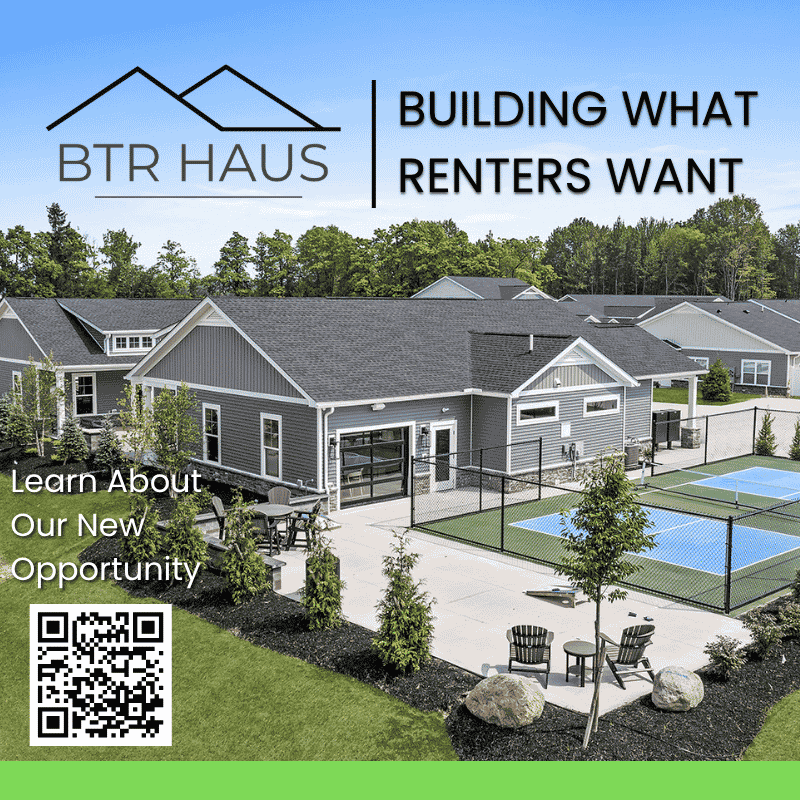
Demand for attainable rental housing continues to outpace supply across the Midwest.
BTR Haus develops single-story build-to-rent communities designed for today's renters while leveraging public incentives to enhance project economics. Colliers recently appraised their Brook Park project at $350K/door, suggesting confirmation of what the market has been signaling: Midwest BTR is pricing at a premium.
With 17,000 units delivered and $4B financed, BTR Haus is currently accepting accredited investors into its newest Midwest build-to-rent opportunity.
*This is a paid advertisement. Please see the full disclosure at the bottom of the newsletter.
Market Snapshot
|
| ||||
|
|
Silver Tsunami
Green Street: Senior Housing Poised to Lead CRE Returns
Senior housing is emerging as one of commercial real estate's strongest investment stories as demographic demand and limited new supply create a favorable environment for sustained growth.
Occupancy hits new highs: Green Street says the sector has moved well beyond its COVID-era recovery. National occupancy has risen more than 200 bps above pre-pandemic levels after fully recovering in 2024, and the firm expects occupancy to continue climbing into the mid-90% range by 2030 as demand outpaces new development.
The biggest driver is simple: The 80-plus population is growing rapidly while new construction remains muted. High development costs and difficult project economics have kept the pipeline thin, giving existing owners greater pricing power and reducing the boom-and-bust cycles seen in other property sectors.
Rents keep rising: Market rents rose at a mid-4% pace in 2025 and are expected to stay in the low-4% range this year. Green Street projects high-5% annual Market-RevPAF growth through 2028, driven by higher occupancy and rent gains. Asset values have also climbed by more than 10% over the past year as cash flow has strengthened and cap rates have compressed.
Profitability improves: Operating conditions are improving. Senior living employment outpaced the broader economy in 2025 while wage growth cooled to 3% to 4% for the first time since 2021. Although staffing challenges remain, easing labor costs and NOI margins in the high-20% range position operators for extended double-digit NOI growth over the next three years, according to Green Street.
Investors are taking notice: Transaction activity accelerated in 2025 as REITs pursued acquisitions and private equity stepped up investments amid improving debt markets. Demand is also strong in age-restricted housing, with Florida-based GL Homes reporting its second-best May ever as sales jumped 41% year over year.
➥ THE TAKEAWAY
The big picture: Senior housing is benefiting from a rare mix of strong demand, limited supply, and improving fundamentals. Green Street says those trends position the sector to deliver some of CRE's strongest returns over the next several years.
✍️ Editor’s Picks
Your investor portal, powered by AI: Ask Claude or ChatGPT anything about investors, raises, distributions, waterfalls, classes, and pipeline activity — all from your live Cash Flow Portal data. (sponsored)
Growth backlash: Affluent newcomers and corporate investment are fueling growth across Southern cities, but soaring housing and living costs are squeezing longtime residents and local businesses.
REIT reset: CIM Group is merging with its nontraded REIT, creating a larger real assets platform and paving the way for a potential public stock listing within the next five years.
Relationship alpha: Higher interest rates are pushing CRE firms to compete on investor experience, making purpose-built CRMs and transparent communication critical to attracting and retaining capital. (sponsored)
Capital reroute: Banks are shifting CRE financing to private credit platforms, changing how commercial real estate deals are funded while reducing direct balance-sheet lending and increasing market complexity.
Tax certainty: New IRS guidance lets many Opportunity Zone projects in expiring areas keep their tax benefits, providing developers and investors with long-awaited certainty.
🏘️ MULTIFAMILY
Permit split: Multifamily permitting remains uneven across U.S. markets, with strong gains in cities like Los Angeles offset by sharp slowdowns in Sun Belt markets including Austin and San Antonio.
Fund boost: Kinect Real Estate raised $127M for its second opportunity fund to support a $1.6B multifamily development pipeline across high-growth Western markets.
Tax crackdown: New York’s pied-à-terre tax is leaving wealthy second-home owners with few legal ways to avoid the new surcharge, prompting some to rent out or sell their properties.
🏭 Industrial
Trade uncertainty: USMCA renewal delays are creating new uncertainty for North American industrial real estate, clouding long-term supply chain and investment decisions despite resilient market fundamentals.
Stake sale: Blackstone is selling its stakes in three Northern Virginia data centers to Digital Realty in a $3.5B deal while maintaining their broader partnership.
Portfolio play: Ares acquired a fully leased three-building industrial portfolio in DFW’s tight Valwood corridor, adding stable cash flow with long-term rent upside.
🏬 RETAIL
Capital unlock: Family Dollar completed a $75M sale-leaseback of 46 stores across 19 states, unlocking capital while maintaining long-term occupancy of the properties.
Retail expansion: Manhattan’s retail recovery is gaining momentum as leasing demand expands beyond premier shopping corridors into neighborhoods, lifting rents and reducing vacancies.
Bagel boom: Einstein Bros. plans to open 300 new stores by 2030 as rising demand and a new store format fuel its nationwide expansion.
🏢 OFFICE
AI magnetism: Institutional investors are buying trophy office buildings in AI-driven markets, betting premium assets will continue to outperform.
Amenity advantage: Coworking spaces are competing with lifestyle amenities, with San Francisco, Cambridge, Minneapolis and Irvine leading in pet-friendly, wellness, childcare and EV charging features.
Flight divide: California's CRE recovery is accelerating, with AI-driven trophy offices, retail and industrial assets outperforming while weaker markets continue to lag.
🏨 HOSPITALITY
Golf clash: President Trump says renovations to D.C.'s East Potomac Golf Course will begin Sept. 1 despite a federal judge's warning that work cannot proceed without court approval.
Hotel syndication: Driftwood Capital launched a DST backed by a Broward Marriott hotel, offering 1031 investors fractional ownership and tax deferral.
Event momentum: Major events and the World Cup are boosting U.S. hotel performance, with strong midweek business travel offsetting softer leisure demand.
📈 CHART OF THE DAY

Investment and development activity have shifted dramatically toward data centers, with AI-driven demand drawing a growing share of CRE capital while traditional sectors like office, housing, and retail attract comparatively less investment.
CRE Trivia (Answer)🧠
Approximately 20%. The deliberate recession that followed broke the inflation spiral that had gripped the U.S. economy through the late 1970s — and reshaped CRE lending for a generation.
More from CRE Daily
📬 Newsletters: Stay ahead of the market with local insights from CRE Daily Texas and CRE Daily New York.
🎙️Podcast: No Cap by CRE Daily delivers an unfiltered look at the biggest trends—and the money game behind them.
🗓️ CRE Events Calendar: The largest searchable calendar of commercial real estate events—filter by city or sector.
📊 Market Reports: A centralized hub for brokerage research and market intelligence, all in one place.
📈 Fear & Greed Index: A fully interactive sentiment tracker on the pulse of CRE built in partnership with John Burns Research & Consulting.

You currently have 0 referrals, only 1 away from receiving Multifamily Stress Test Model.
What did you think of today's newsletter? |
Reply