- CRE Daily
- Posts
- Opportunity Zone Investors Face Deferred Tax Bill at Year-End
Opportunity Zone Investors Face Deferred Tax Bill at Year-End
A key tax deadline is approaching for Opportunity Zone investors as billions in deferred capital gains become taxable at the end of 2026.

Nina Dale
July 28, 2026
In partnership with

Good morning. A long-awaited tax deadline is fast approaching for Opportunity Zone investors. While deferred gains become taxable at the end of 2026, new legislation is reshaping the incentive program for future investments.
🎙️ This Week on No Cap: Jim Corl of Cohen & Steers joins Jack and Alex to explain why public REITs often signal where private real estate is headed. (Thanks to our sponsor, Lennar Investor Marketplace)

CRE Trivia 🧠
Who launched the world's first hedge fund in 1949, pioneering the long-short equity strategy that defined the entire industry?
IN PARTNERSHIP WITH MORNINGSTAR
What if you saw the risk before the headlines?
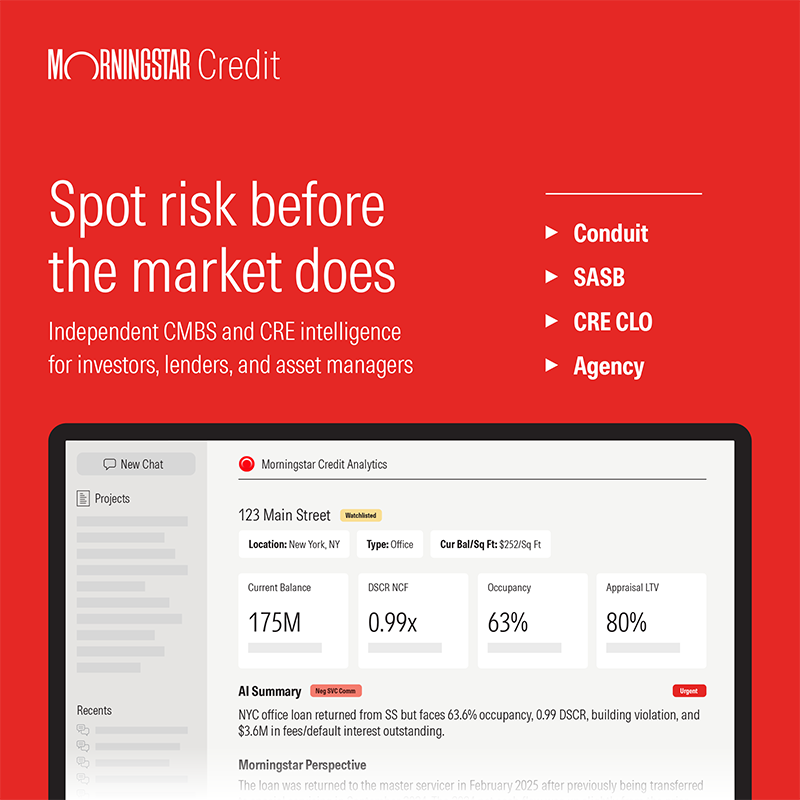
In CMBS and commercial real estate, the firms that move first win.
Morningstar Credit Analytics delivers independent, rating-agency-aligned data, surveillance, and research across conduit CMBS, CRE CLOs, agency, and SASB. Access our data on the platform, via API, or, for premium users, inside your AI workflow through our Claude MCP connector.
Get started with a free research and Newsflash account.
*This is a paid advertisement. Please see the full disclosure at the bottom of the newsletter.
Market Snapshot
|
| ||||
|
|
Opportunity Countdown
Opportunity Zone Investors Face Deferred Tax Bill at Year-End
Investors who used Opportunity Zone (OZ) funds to defer capital gains taxes are approaching a major deadline, with taxes on years of deferred gains coming due at the end of 2026.
By the numbers: The capital gains tax deferral created under the 2017 Tax Cuts and Jobs Act expires on Dec. 31, 2026. Treasury estimates investors had $75B in deferred gains outstanding at the end of 2024, spread across roughly 12,800 Qualified Opportunity Funds and 41,000 investors.
Why it matters: OZs were created to spur investment in economically distressed communities through Qualified Opportunity Funds (QOFs). Investors have been able to defer taxes on eligible capital gains until the end of 2026 and avoid taxes on any appreciation after holding the investment for at least 10 years.
Early investors see the biggest break: Investors who entered OZ funds by the end of 2019 qualify for a 15% step-up in basis, while those who invested by the end of 2021 receive a 10% step-up. Later investors only benefited from the tax deferral. Advisors say investors should be prepared for the upcoming tax bill, though some funds have provided liquidity to help cover the cost.
High-income investors dominate the program: Treasury data shows about 85% of QOF investors are individuals, with the typical investor reporting $738,000 in adjusted gross income in 2024. Despite the looming tax bill, most are expected to stay invested to preserve the program's biggest benefit: tax-free appreciation after 10 years.
New rules in 2027: Legislation signed last year made OZs permanent. Starting Jan. 1, 2027, all new investments will receive a five-year capital gains deferral and a 10% basis step-up, while qualifying rural funds will receive an enhanced 30% basis step-up.
➥ THE TAKEAWAY
What comes next: The countdown to the 2026 tax deadline has begun for Opportunity Zone investors. Beyond that milestone, the program's permanent status and revised incentives could keep capital flowing into underserved communities for years to come.
✍️ Editor’s Picks
Retail's pricing disconnect: 4.4% vacancy, superior NOI growth, yet higher cap rates than other asset types. ZRP's Curt Schade on the gap institutions are starting to notice, from a sponsor with 35 years of experience. (sponsored)
Tariff turbulence: The U.S. imposed new tariffs on more than 80 countries, creating fresh uncertainty for CRE costs as developers face potential price increases for materials and construction projects.
Return streak: Institutional real estate returns rose for a fourth consecutive quarter in Q2 2026, reaching their strongest annual performance since 2022 as property values stabilized and income remained resilient.
Financing matures: Growing acceptance among institutional investors is transforming C-PACE from a niche lending product into a mainstream component of CRE capital stacks. (sponsored)
Tax battles: U.S. voters will decide on dozens of tax measures that could reshape property tax revenues, government budgets and housing costs across multiple states.
Nvidia backing: Nvidia is negotiating a $250B financing guarantee for OpenAI’s massive Ohio data center project, supporting one of the largest AI infrastructure developments ever planned.
🏘️ MULTIFAMILY
Multifamily dominance: Recent CRE CLO deals are heavily concentrated in multifamily assets, with apartments making up nearly 80% of collateral as lenders favor familiar sectors in a high-rate environment.
HUD challenge: A lawsuit challenges HUD’s funding changes for fair housing programs, raising concerns over reduced local enforcement and new compliance risks for CRE investors.
Rental resurgence: San Francisco apartment vacancy fell to a 20-year low as AI-driven demand and limited supply pushed rents up 11% year-over-year, making it the nation’s priciest rental market again.
Affordable expansion: Logos Faith Development plans 15 affordable housing groundbreakings across Southern California by 2028, growing its $750M pipeline with faith-based partners.
🏭 Industrial
Industrial handoff: MAG Capital Partners sold a 1.37M SF Midwest industrial portfolio to Starwood Property Trust in an $89M deal highlighting continued demand for net-lease assets.
Industrial momentum: EQT secured $268M in financing for an 11-property industrial portfolio totaling 2.8M square feet, reinforcing investor appetite for logistics assets.
Battery boom: Battery storage is emerging as a new CRE asset class as surging power demand from data centers drives billions in investment and expands energy-focused real estate opportunities.
AI tailwind: Industrial real estate is gaining a second wave of rent growth as AI infrastructure demand boosts logistics needs amid limited supply and rising construction costs.
🏬 RETAIL
Fuel squeeze: Rising fuel prices are driving freight costs higher and pressuring retailers as consumers cut back on discretionary spending and shopping trips.
Retail selectivity: Retail investment activity slowed as buyers became more disciplined, pushing cap rates higher and rewarding only well-located assets with strong fundamentals.
Valley expansion: Signorelli is launching a 1M SF Houston-area mixed-use project featuring office, housing, retail and hospitality anchored by a new H-E-B store.
🏢 OFFICE
Vanderbilt echoes: Vornado acquired a 49% stake in Park Avenue Plaza and the neighboring CBS Studio Building, blending a major Midtown office investment with a property rich in music history.
Lone star acquisition: Lone Star Funds acquired Dallas’ 20-story Premier Place office tower, adding a recently renovated asset with major tenants to its real estate portfolio amid signs of market stabilization.
Lender takeover: Lenders KKR Real Estate Finance Trust and AllianceBernstein took ownership of BioMed Realty’s Boston lab and office campus as life sciences demand cools and vacancy rises.
🏨 HOSPITALITY
Maui wellness: Four Seasons Resort Maui unveiled Kai Holo Spa, a new island-inspired wellness sanctuary featuring hydrotherapy, longevity treatments, and immersive experiences designed to elevate guest stays.
Nashville boost: Southwest Value Partners secured a $270M refinancing for the Grand Hyatt Nashville, unlocking nearly $73M in equity as lenders show confidence in strong-performing downtown hotels.
📈 CHART OF THE DAY

Crossing landlord incentives with renter demand reveals that the U.S. isn't one rental market but four distinct ones, and notably, no major metro combines high renter anxiety with generous concessions, highlighting where housing stress is most acute.
Alfred Winslow Jones. His New York firm paired leveraged long positions with short sales to hedge market risk; the term "hedged fund" was coined specifically for his approach.
More from CRE Daily
📬 Newsletters: Stay ahead of the market with local insights from CRE Daily Texas and CRE Daily New York.
🎙️Podcast: No Cap by CRE Daily delivers an unfiltered look at the biggest trends—and the money game behind them.
🗓️ CRE Events Calendar: The largest searchable calendar of commercial real estate events—filter by city or sector.
📊 Market Reports: A centralized hub for brokerage research and market intelligence, all in one place.
📈 Fear & Greed Index: A fully interactive sentiment tracker on the pulse of CRE built in partnership with John Burns Research & Consulting.

You currently have 0 referrals, only 1 away from receiving Multifamily Stress Test Model.
What did you think of today's newsletter? |
Reply